
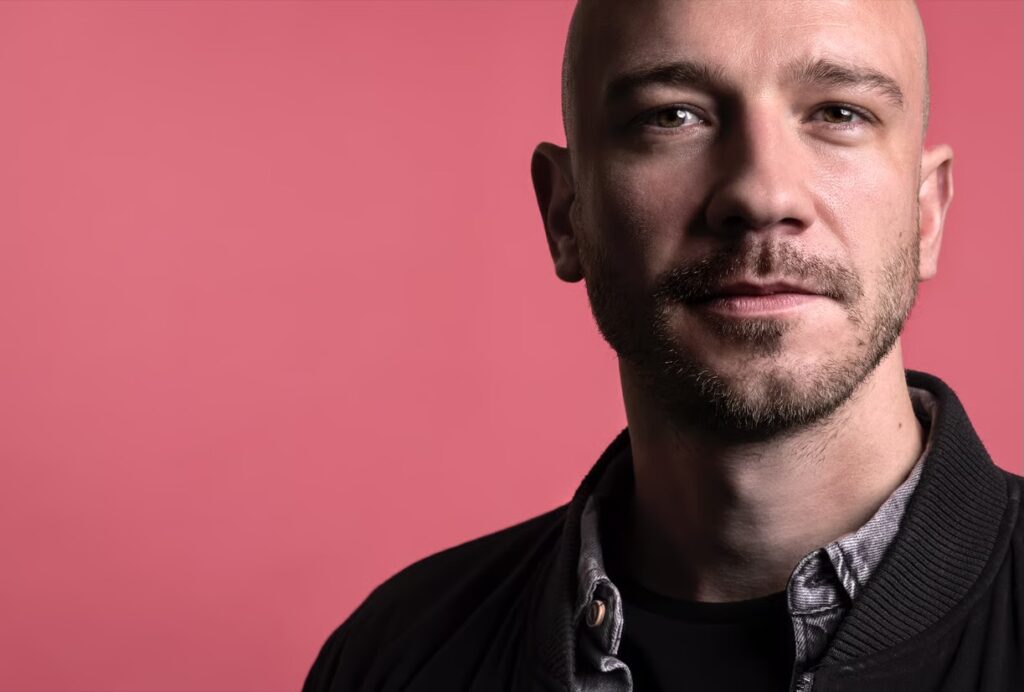
Before Yozma Fellowship existed, there was Martin.
In 2013, Martin was an entrepreneurship student with a clear ambition: he wanted to build companies. Like many students, however, he had very little access to the founders, investors and entrepreneurial networks that could help him get started.
After meeting Yozma founder David Fogel, Martin was introduced to an entrepreneurship centre in Israel and secured an internship. With no Hebrew, no local network and knowing almost no one in the country, he packed his bags and moved to Tel Aviv.
That single decision transformed his career.
Within eight months, Martin became the COO of StartupBootcamp TLV, one of Europe’s leading startup accelerators, building relationships with founders, investors and operators across Israel’s entrepreneurial ecosystem. He later returned to Europe to lead a pan-European accelerator programme, investing in and supporting more than 50 startups while connecting founders with mentors and investors from across his growing international network.
Martin then joined one of those portfolio companies as COO and CFO, helping scale the business through a period of rapid growth and raising more than $250 million. Today, he is the founder of a climate technology company based in Hamburg and an active angel investor in the German startup ecosystem.
Martin’s journey reflects exactly what Yozma Fellowship is designed to create. Not a predetermined career path, but access to extraordinary people, global networks and transformative experiences that enable ambitious students to build their own future.
We were delighted that Martin agreed to reflect on his journey, the lessons he learned along the way, and the advice he would give to the next generation of entrepreneurial students.
What made you first explore entrepreneurship abroad, what did you not have at that point that people often assume future founders need?
A: There’s a common myth that you need a “war chest” and a Rolodex to start. I had neither. I lacked a network, access to capital, and a formal mentor. What I did have was the realization that information is cheap but execution is expensive. I stopped waiting for permission and decided to figure it out in the field.
You researched global ecosystems. What made you choose Israel as the place you wanted to go to? What were you looking for and why did Israel stand out for someone starting from zero?
A: I didn’t just stumble into Israel; I chose it for its Chutzpah-to-GDP ratio. I was fascinated by the “Startup Nation” ethos—specifically the irrational drive to succeed against all odds. As a German, I saw a strategic gap in my own upbringing. I went to Israel to “de-risk” my mindset by immersing myself in a culture where failure is a data point, not a dead end.
You arrived without a network and a not clearly defined role waiting for you. What was the very first opportunity you took and why did you say yes to something small?
A: I needed an “anchor tenant” for my career in a new ecosystem. While my peers were chasing the safety of consulting and banking, I optimized for proximity to talent. I took an unpaid internship because it provided the highest “surface area” for luck. It wasn’t about the title; it was about getting a seat at the table where the real conversations were happening.
What changed once you were physically around founders, investors, and operators on a daily basis? What did that environment teach you that no course or book could?
A: The shift was moving from a “student” mindset to a “value-provider” mindset. I realized that even as a newcomer, I could solve problems. I carved out a niche by translating complex visions into investor-ready pitch decks. The lesson? You don’t ask for a network; you build one by being undeniably useful to the people already in it.
Within eight months, you moved from a short internship to a real role as COO of European top Accelerator and managed to build a strong network.
What behaviours or mentality accelerated that transition and what would have slowed it down?
A: In Israel, speed is a currency. My transition from intern to COO was driven by radical proactivity. I treated every interaction as a performance review. When you consistently deliver value under pressure, the ecosystem “pulls” you upward. If I had waited for a job description or a formal promotion, I’d still be an intern.
When you later moved back to Germany to lead a EU accelerator, how did your time in Israel and connections you’ve built help shape how you thought about companies, founders, and risk?
A: I returned with a “refusal to lose.” My time in Israel taught me that “No” is usually just the start of a negotiation. I brought back a high-velocity approach to risk and a mental framework that prioritized speed over perfection. I wasn’t just running an accelerator; I was injecting that Israeli urgency into the DNA of European founders.
After spending seven years inside a globally scaling startup, were there lessons from your time in Israel working with founders and investors, which proved their value once things became difficult?
A: When I became CFO of a high-growth startup led by Israeli founders, my “technical” skills were secondary to my cultural fluency. I understood their shorthand for urgency and their appetite for risk. Because I had lived in their ecosystem, I wasn’t just a hire; I was a trusted partner who could navigate high-stakes fundraising with their same “all-in” mentality.
When you eventually started your own company, were there any long-term mentors and advisors from Israel that influenced your decisions as a first-time founder?
A: The Israeli influence is my “Internal Operating System.” My advisors from Tel Aviv don’t give me soft advice; they give me unfiltered truth. That mental grit—the ability to stare at a problem and find a way through it rather than around it—is the single most valuable asset I have as a founder.
Today, as an angel investor and ecosystem builder, do those early relationships still create leverage for you?
Can you give one concrete example?
A: The Tel Aviv network is the ultimate force multiplier. It provides unreasonable access. For example, when I’m validating a new venture or investment, I can get a “brutally honest” peer review from top-tier founders in hours, not weeks. That level of high-trust, high-speed feedback is a competitive advantage you can’t buy.
If you could speak to a second-year student who is curious about entrepreneurship but unsure if they are “ready,” what would you tell them to do sooner rather than later?
A: “Ready” is a hallucination. If you feel 100% prepared, you’re already too late. The most successful founders I know started while they were still “unqualified.” Stop over-analyzing and start optimizing for intensity. Go where the heat is.